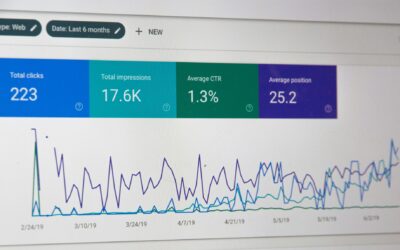

The campaign has been running for 3 weeks. The spend is real, the impressions are fine, the click-through rate is respectable enough that nothing looks obviously broken. And you have nothing to show for it. Maybe a few leads, none of them worth a conversation.
The advice you will get at this point is almost always some version of give it more time and more budget. Both of those can be correct. They are also the most expensive things to try first, because if something upstream is wrong, additional spend buys you a faster, more thorough demonstration of the same problem.
Before you increase anything, there are 5 things worth checking. They are ordered deliberately, from the ones that cost nothing to verify to the ones that require actual work, and in my experience the answer is usually somewhere in the first 3.
What Ads Can and Cannot Do
Worth establishing first, because it explains most disappointing campaigns.
An ad puts your message in front of more people. That is the entire function. It is a distribution mechanism, and a very good one.
What it cannot do is make an unclear offer clear, build trust that does not exist yet, or convert traffic that arrives somewhere unconvincing. Ads amplify whatever is already there. If what is already there converts warm traffic at a reasonable rate, amplification works beautifully. If it does not, you have purchased a larger sample of the same result.
This is why ads so often feel like they failed when they were actually reporting accurately. The campaign did its job. It sent people. What happened next was determined by things the campaign has no control over, which is why the diagnostic below spends most of its time on everything except the campaign settings.
1. Check What Happens After the Click
Start here, because it is the most common failure and the cheapest to verify.
Open your ad on your phone, click it as a stranger would, and go through the entire path to the point of contact. Time it. Notice every moment where you have to think about what to do next, because a stranger with less patience than you will simply leave at that point.
What you are looking for: does the page match the promise of the ad, closely enough that someone arriving does not have to reorient? A common and easily missed killer is an ad about a specific problem that lands on a general homepage, which forces the visitor to figure out where she is. Most people will not do that work.
Then: is there one obvious next step, described plainly? Or are there several, or one buried below several screens of scrolling?
Check the practical things while you are there. How fast does the page load on a phone connection, since a meaningful share of people leave before a slow page finishes. How long is the form, since every additional field costs you submissions. Whether the page works properly on a small screen, given that most of your paid traffic will be on one.
If your ad sends people to a page that was written for a different purpose, that alone can account for the entire result, and no amount of targeting refinement will fix it.
Insider Tip from Andrea
If you are running ads to a homepage, that is usually the whole problem. A homepage has to serve everyone who arrives from every direction, which makes it excellent at nothing in particular. Paid traffic needs a page that continues the specific conversation the ad started.
2. Check Whether You Have Tested This Message Anywhere Else
Here is a question worth sitting with. Has this offer, in these words, ever converted anyone?
If your organic content, your email list, or your discovery calls have never produced a yes using this framing, ads are not the place to find out whether it works. Cold traffic is the least forgiving audience you will ever address. Warm audiences fill in gaps, extend goodwill, and interpret vague language charitably because they already trust you. Strangers do none of that.
The practical version: prove the message manually first. Send it to your list. Say it on calls. Post it organically and see whether anyone responds. If it lands somewhere warm, it has a chance cold. If it has never landed anywhere, you are paying for the test.
There is a useful diagnostic hiding in this. If your offer converts well in conversation and poorly in writing, the problem is the writing rather than the offer, and that is a much easier thing to fix than most people assume. Record yourself explaining it to someone and use those words.
3. Check Who Is Actually Arriving
Look at the leads you did get, not the metrics. What did those people want?
If they are asking for something adjacent to what you sell, cheaper than what you sell, or earlier-stage than what you sell, the targeting is technically working and pointed at the wrong person. That is a message problem more often than a settings problem, because the ad copy is describing the offer in terms that appeal to a broader group than you intended. Broad language attracts broad interest, and paid traffic makes that happen faster and more expensively than organic ever would.
If the leads are the right person and simply not converting, the issue is further down, at the offer or the follow-up. Different fix entirely.
And if there are effectively no leads at all, go back to checks 1 and 2, because something is failing before intent ever forms.
It is worth actually asking the leads you did get what they were expecting. A short reply asking what prompted them to reach out will tell you what your ad is communicating, which is frequently different from what you intended it to communicate.
4. Check the Timing Assumption
This one gets missed constantly in service businesses.
Ads work best when the action requested matches how ready the audience is. A stranger who saw one ad is not ready to book a consultation with you. She has known you existed for 8 seconds.
Asking cold traffic for a high-commitment action is the single most common structural mistake in service business advertising. The ad might be excellent and the page might be excellent, and the ask is simply too large for the relationship. It is the equivalent of proposing on a first introduction, where nothing about the proposal is wrong except the timing.
What tends to work instead is a smaller step. A useful resource, an assessment, something that helps whether or not she ever hires you. Then the relationship builds over the weeks or months it actually takes, and the consultation happens later, warm.
This changes what you measure. Cost per lead goes down, cost per client takes longer to calculate, and the campaign looks worse on the metric everyone watches and better on the one that matters.
It also requires something to exist on the other side. If you capture email addresses and never write to them, the smaller ask produces a list rather than clients, which is a different kind of failure and an easy one to walk into. The lead magnet only works when something follows it.
Did You Know?
Andrea’s take: Most service businesses would get more from spending their ad budget on a lead magnet campaign than on a consultation campaign, even though the consultation feels more direct. The direct route only works when someone is already close to deciding, and cold traffic almost never is.
5. Check Whether You Have Given It Enough Data
Now, and only now, the technical answer.
Platforms need volume to optimize. A campaign that has produced 6 conversions has not given the system enough information to learn who to target, which means early performance is closer to noise than signal. Judging a campaign at that point is a bit like judging a recipe from the smell.
Same with time. Service businesses have long consideration windows, so someone who clicked in week 1 may inquire in week 9, and attribution will likely miss the connection entirely. Short campaigns systematically undercount their own results, and the undercounting gets worse the longer your typical sales cycle runs. If it takes your clients 3 months to decide, a 6 week campaign has not finished reporting.
A related trap is changing things too often. Every meaningful edit to targeting, creative, or budget restarts the learning process, so a campaign that gets adjusted twice a week never accumulates enough data to perform. If you are going to run ads, decide what you are testing, leave it alone long enough to know, and resist the urge to fiddle on slow afternoons.
If the first 4 checks came back clean and the campaign is genuinely young, more time and budget may be the right answer. That is a very different situation from starting there.
When Ads Are Not the Right Move at All
Sometimes the honest answer is that this is not the tool for right now.
Ads are worth running when you know who you serve, your message has converted somewhere, your page does its job, and you can afford to spend for a few months before drawing conclusions. When those conditions hold, paid traffic is a genuinely good way to accelerate.
When they do not hold, ads become an expensive way to discover things you could have learned for free. If your positioning is still unsettled, spend that money on figuring it out. If your site does not convert the traffic you already have, fix that first, since more visitors to a page that loses people just increases the volume of loss.
There is also a scale consideration. A firm that needs 12 clients a year does not necessarily need paid acquisition at all. Search, referrals, and a list can produce that comfortably, and they compound rather than stopping the day you pause spend. Ads are rented attention, which is genuinely useful when you need volume quickly and less useful when what you actually need is 1 good client a month.
The cleanest way to think about it is that ads accelerate something that already works. They are a poor choice for discovering whether something works, because discovery is cheap through other means and expensive through paid traffic.
A Reasonable Order of Operations
If you want to run ads and have them work, the sequence looks like this.
Get your positioning settled so you know exactly who you are talking to. Prove the message somewhere warm. Build one page that does one job for one audience. Choose an ask that matches how cold the traffic is. Then spend, and give it enough runway to produce real data.
Decide the budget and the window before you start, and write both down. Ads without a predetermined stopping point tend to continue on hope, because pausing feels like admitting the money was wasted, and the sunk cost keeps the campaign alive well past the point where it was answering anything useful.
Skipping steps is possible and it makes the ads a diagnostic tool rather than a growth channel. That is not worthless, it is just a costly way to run the test.
Where to Start
If your ads are not working, open your phone and click your own ad. That takes 5 minutes and resolves the question more often than anything else on this list.
Then ask whether this message has ever converted anyone anywhere. If the honest answer is no, pause the campaign and go find out somewhere cheaper. Nothing about that is a failure. It is the cheapest possible version of the lesson, learned before the budget went with it.
If you would rather have someone look at the whole path with you, from what the ad promises through to what happens after the click, book a free strategy session. We will find where it is breaking down, and if the answer is that ads are not your next move, you will hear that too.