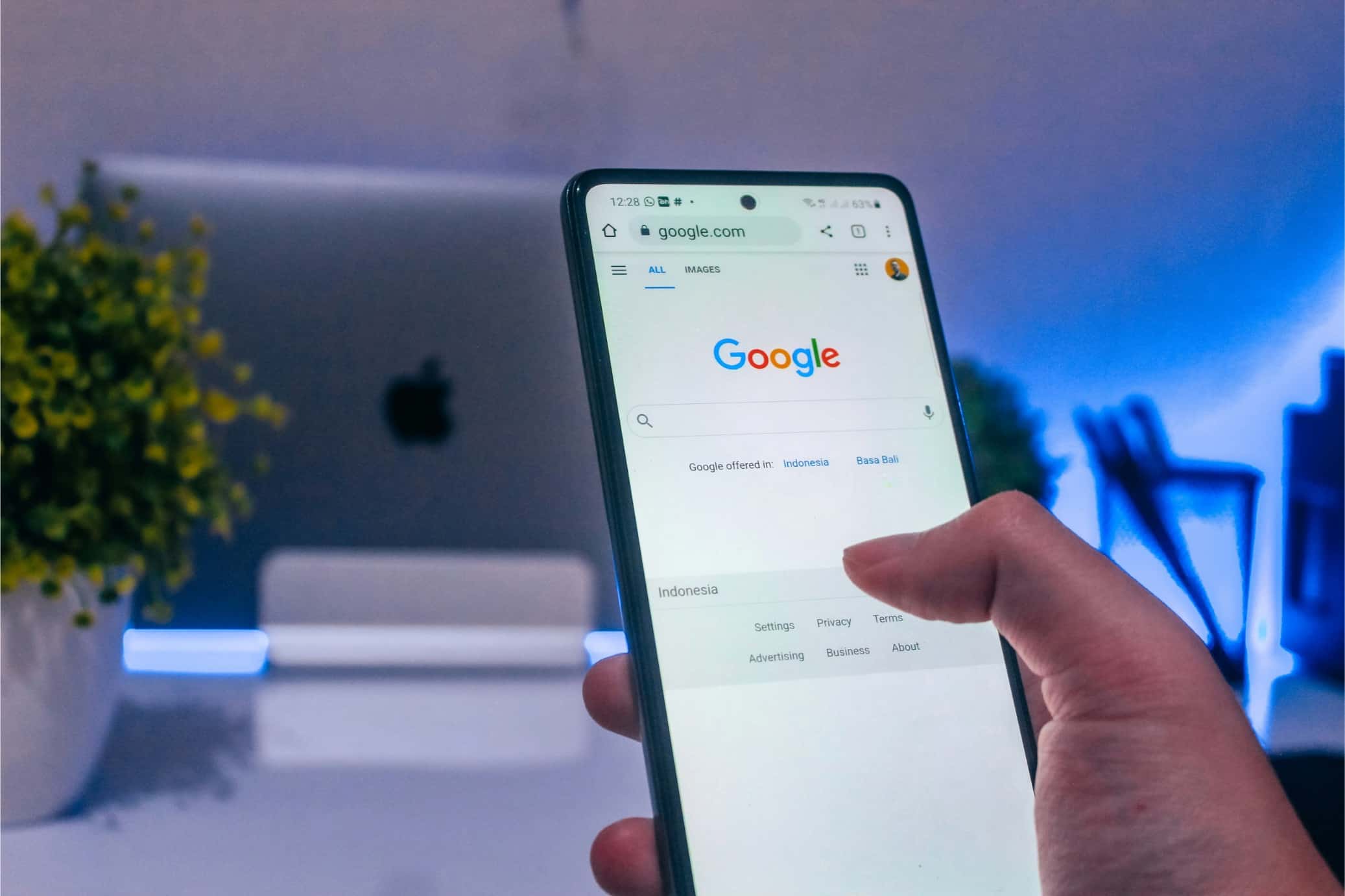
Somebody two miles from your office typed your service plus your city into Google this week. Three businesses came up in a box at the top of the page with a little map beside them.
You were not one of them.
That box is where a meaningful share of local hiring decisions get made, and it operates on a completely different set of rules than the regular search results underneath it. You can have a beautiful website, strong content, and genuine authority in your field and still be invisible there, because the box is not evaluating your website at all. It is evaluating something else entirely.
The good news is that “something else” is mostly a checklist, and most service businesses have never worked through it.
The Box Is Its Own System
Regular search results and the local results are two different competitions.
The regular results care about your website: your pages, your content, your links, how long your site has been around. The local box, often called the local pack, cares about a separate asset called your Google Business Profile. That profile is a free listing you control, and it is the thing being ranked.
Google has been fairly open about what drives those rankings, and it comes down to three factors:
| Factor | What it means | How much you control it |
| Relevance | How well your profile matches what was searched | High |
| Distance | How far you are from the searcher or the place they named | Low |
| Prominence | How well known and well regarded you appear to be | Medium to high |
Distance is the one people fixate on and the one you can do least about. Relevance and prominence are where the work is, and relevance in particular is often a thirty-minute fix that nobody has made.
Insider Tip from Andrea: Most businesses that cannot be found locally do not have a ranking problem. They have a completeness problem. The profile exists, it was set up once, and half the fields are empty. Google is not withholding visibility out of judgment. It simply does not have enough to work with.
Start With the Profile, Not the Website
If you do nothing else from this article, do this part. These are the items that move local visibility the most, in rough order of impact.
Claim and verify the profile. If you have never done this, there may still be a listing for your business that Google generated on its own, and you do not control it. Search your business name and look for the option to claim it. Verification can take a few days and sometimes requires a video or a postcard.
Get the primary category right. This is the single highest-impact field on the entire profile and the one most often set carelessly. Your primary category should be the closest available match to the main thing you do, stated the way a customer would think of it. Add secondary categories for the rest, but keep the primary one precise. Changing it from something generic to something specific can visibly change what you appear for. Worth checking what category the businesses currently ranking above you have chosen, because it is public on their profiles and it is often the whole difference.
Fill in every service. There is a services section and almost nobody completes it. List each service by name, with a short description for each. These descriptions are read as relevance signals and they are also what a human sees when they open your profile.
Set your service area correctly. If clients come to you, list your address. If you go to them, or if you work remotely, you can hide the street address and define the areas you serve instead. Do not list fifty towns. List the ones you genuinely serve, because an overly broad area dilutes rather than expands.
Write the description deliberately. You get around 750 characters. Use them to say who you help, what you do, and where, in plain language. Do not stuff it with keywords. Do write the words your clients actually use.
Add real photos. A logo, an exterior shot if you have premises, a photo of you, and a handful of images of the work or the setting. Profiles with photos get engaged with more, and engagement feeds back into prominence.
Keep the hours accurate, including holidays. This matters more than it sounds. Wrong hours produce a bad experience, bad experiences produce bad reviews, and Google appears to deprioritize profiles with poor engagement signals.
Use the posts feature. Short updates, a few times a month. Each one is a small, fresh signal that the business is active.
Working through that list takes an afternoon. For a lot of service businesses it is the single highest-return afternoon available to them, because the asset is free and the competition for it is unusually thin.
Reviews Are the Prominence Engine
Of the three ranking factors, prominence is the one you build over time, and reviews are the largest lever inside it.
Three things matter, roughly in this order:
Volume. How many you have, relative to the other businesses showing up for the same search. You are not aiming for a number. You are aiming to not be the one with four when everyone else has forty. This is a relative standard rather than an absolute one, which is good news, because in a lot of professional service categories the bar is far lower than people assume.
Recency. A steady trickle beats a cluster. Twenty reviews spread across two years reads as an active business. Twenty reviews posted in one week reads as something else, and it can trigger filtering.
Response. Replying to reviews, including the critical ones, is a visible engagement signal and it is read by every human who scrolls your profile. Reply to all of them, briefly, in your own voice.
The practical move is to build the ask into your process rather than running campaigns. The moment a project wraps and the client is pleased is the moment to ask, and asking once, directly, with a link, works far better than a generic request. Send the direct review link rather than telling someone to look you up.
One thing to avoid completely: do not offer anything in exchange for a review. It violates Google’s policies, it risks the profile, and it produces the kind of review that convinces nobody.
Did You Know? Google treats consistency across the web as a trust signal. If your business name, address, and phone number appear differently on your website, your profile, your social accounts, and old directory listings, those inconsistencies work against you. Picking one exact format and making every listing match it is tedious and genuinely effective.
What Your Website Still Has to Do
The profile drives the box. Your website supports it, and there are a few specific things it needs.
A page for each service, not one page listing all of them. If you offer four services, four pages, each one written to be the best answer to someone searching for that service. One combined page competes for nothing.
The location named in actual sentences. Not stuffed into a footer. Your city or region should appear in your headings and body copy because it is genuinely relevant, which it is if you serve that area.
The same contact details as the profile, in text. Phone number and address as selectable text rather than inside an image, and matching the profile exactly.
A real contact page. Address if you have one, service area if you do not, a map, a phone number, and a form. Simple, and frequently missing.
Reasonable speed on a phone. Most local searches happen on mobile. A page that takes six seconds to load loses people before anything else you have done matters.
If you serve several distinct areas and genuinely work in each of them, individual pages for each area can help, provided each page is substantively different. Spinning up fifteen near-identical pages with the town name swapped out is a well-known pattern that Google handles poorly, and it is worse than having none.
How to See Where You Actually Stand
Your own search results are not a useful test, because Google personalizes based on your history and your location. Here is how to get an honest read.
Search from the searcher’s position. Use an incognito window, and search your service plus your city rather than relying on wherever your laptop happens to be. The results you see from your office are not the results a prospect sees from across town. Try two or three phrasings as well, because the box can look completely different for “marketing consultant” and “marketing agency” in the same city.
Look at the three businesses that do appear. Open each profile. Count their reviews, note their primary category, read their services section. The gap between their profile and yours is usually the entire explanation, and it is usually unglamorous.
Check your profile insights. The profile reports how people found you, what they searched, and what they did next. The search terms section in particular tells you what Google currently thinks you are, which is sometimes a surprise.
Track one number monthly. Calls or direction requests from the profile. One number, checked once a month, tells you more than a dashboard you will stop opening. Write it down somewhere you will see it next to last month’s figure, because the trend is the information and a single month in isolation tells you almost nothing.
Expect this to take time. Profile completeness changes can show up within a couple of weeks. Review volume and prominence build over months. If someone promises you the local pack in thirty days, they are describing a sales timeline rather than a search one.
The Mistakes That Cost the Most
Multiple listings for one business. Duplicates split your signals and confuse everything. Find them and have them merged or removed.
A keyword-stuffed business name. Adding your service and city into the name field violates policy and risks suspension. Use your actual business name.
A fake or borrowed address. A mailbox, a coworking desk you do not occupy, or a relative’s house. Suspensions here are hard to reverse and the recovery process is slow.
Treating setup as the whole job. A profile completed once in 2022 and never touched since is a dormant asset. Activity is itself a signal.
Ignoring the questions section. People ask questions on your profile and anyone can answer them, including people who do not work for you. Check it, and seed it with the questions you get asked most, answered properly. It is a small thing that takes twenty minutes and it puts useful information in front of people at the moment they are comparing you against two other names.
Where to Start
Block out one afternoon this week and work straight down the profile checklist. Primary category first, then services, then photos, then the description. That sequence produces the most movement for the least effort, and you will likely see something change within a few weeks.
Then build the review ask into how you close out every engagement, so prominence accumulates without requiring a campaign. Put it in your offboarding email template, or in whatever checklist you run at the end of a project, so it stops depending on you remembering in the moment.
If you want a short, practical list of the search and visibility fixes that matter most for a small service business, the Get Found Faster Checklist covers the ones worth doing first.
And if you are not sure whether local visibility is even your bottleneck right now, the Stage Assessment will tell you what should come first, or you can book a strategy session and work it out with someone.
The box at the top of the page is winnable. Most of your competitors have not tried.