If you are reading this, there is a reasonable chance you searched for reviews of us. That is a sensible thing to do before hiring anyone, and it deserves a straight answer rather than a sales pitch.
So here it is first, and then something more useful. Our reviews are on our homepage, displayed with each reviewer’s name and the date they wrote it. That is the direct answer to what you searched for.
The more useful part is how to read reviews for any marketing consultant, ours included, because reviews in this industry are easy to misread and a few simple checks separate the ones worth trusting from the ones that tell you very little. We would genuinely rather you evaluate us properly than simply take our word for anything.
First, Make Sure You Are Reading the Right Company
This sounds obvious, and it catches careful people constantly.
Business names overlap far more than you would expect. A search for a company’s reviews frequently returns results for a different business with a similar name, sometimes in a completely unrelated field and sometimes, more confusingly, in exactly the same one. Searching for us, for instance, turns up a freelance marketplace, a private equity firm, several nonprofits, and at least one other marketing agency with a name close to ours. Any of those could easily be mistaken for us by someone moving quickly.
Before you trust any review, confirm it is attached to the business you are actually considering. Check that the name matches exactly, that the location makes sense, and that the service described is one they actually offer. A glowing review of a different company is no evidence at all, and a harsh one is no evidence against.
The simplest way to avoid this entirely is to start from the business’s own site and follow whatever review sources it points to, rather than relying on a general search that mixes several different companies together.
Insider Tip from Andrea
Read reviews with the same skepticism you would bring to anything else that is trying to persuade you. That includes ours. A review is one person’s experience at one point in time. Useful, genuinely, and worth weighing alongside how the business actually communicates with you when you talk to it.
Where Reviews Live, and What Each Source Tells You
Reviews for a small consultancy tend to sit in a few different places, and each one has its own strengths and blind spots.
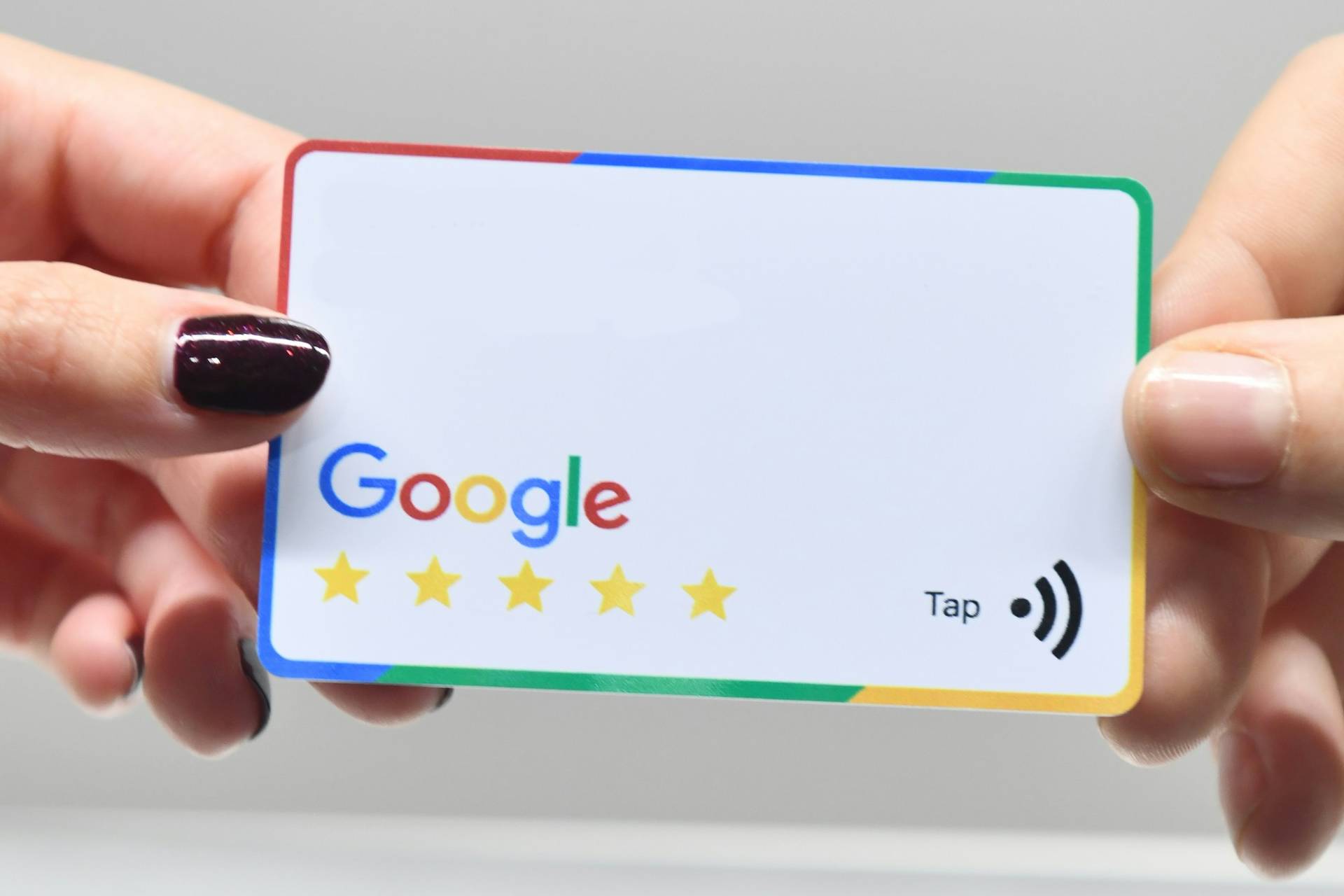
Search and map listings. Reviews attached to a business’s search listing are usually the most visible and the hardest to edit selectively, since the business cannot simply remove the ones it dislikes. That makes them relatively trustworthy, with the caveat that they skew toward whoever felt strongly enough to leave one.
The business’s own website. Testimonials on a company’s site are chosen by the company, which means they show the experiences it wants you to see. That does not make them false. It does mean they are a curated selection rather than a complete picture, and they are most useful when they include names and dates you could in principle verify.
Professional networks. Recommendations on professional platforms are attached to real, visible profiles, which adds credibility. They also tend toward politeness, since people are writing publicly under their own name and reputation.
Directories and marketplaces. Some consultants list on directories with their own review systems. These vary enormously in rigor, and some are closer to advertising than to independent assessment.
No single source is complete on its own. The most reliable picture comes from looking across several of them and noticing whether they tell a consistent story.
What a Useful Review Contains
Not all reviews carry the same weight, and a few specific features distinguish the informative ones from the rest.
Specificity. A review that describes what the reviewer was dealing with and what changed tells you something you can use. A review that says someone was wonderful to work with tells you they had a pleasant experience, which is nice and not very decisive on its own. The more concrete the detail, the more the review is worth to you.
A situation that resembles yours. The most useful review is from someone whose business looks like yours. A glowing account from a company with a completely different model is considerably less relevant than a modest one from someone facing your exact problem at your exact stage.
A date. Businesses change over time. A review from three years ago describes a business that may have different staff, different services, and different processes now. Recent reviews reflect much more accurately what you would actually be hiring today.
A real name. Reviews attached to an identifiable person are more credible than anonymous ones, simply because someone was willing to put their own name to what they wrote. That is not proof of anything on its own, and it is still a reasonable signal to weigh.
And what the reviewer valued. Pay attention to what people single out. If several reviewers independently praise the same quality, that pattern is more meaningful than any single review, and it tells you what the business is genuinely good at rather than what it claims.
The Warning Signs
A few recognizable patterns suggest that a set of reviews is telling you less than it appears to.
Every review sounds the same. When a set of reviews uses similar phrasing, praises identical qualities in identical language, or reads like it followed a template, that uniformity is worth noticing and weighing accordingly.
Nothing but superlatives and no detail. Reviews that are all enthusiasm and no substance tell you people were happy without ever telling you why, which makes them genuinely hard to act on when you are trying to decide.
A sudden cluster. Many reviews appearing in a short window, followed by long silence, sometimes reflects a one-time push to collect them. That is not necessarily a problem, since plenty of businesses simply remember to ask all at once, and it is worth knowing when you weigh them.
Reviews that do not match the business. Praise for services the company does not appear to offer, or descriptions that do not fit what the business says it does, can indicate confusion or something less innocent.
And the complete absence of anything critical over a long period. Most real businesses accumulate the occasional mixed review over the years. A long record with no friction at all is not impossible, and it is worth reading a little more carefully.
Did You Know?
Andrea’s take: The most informative thing about any reviews is often what the business does in response to them. How someone handles a critical review, whether they engage with it honestly or defensively, tells you a great deal about how they would handle a problem in your own engagement.
What Reviews Cannot Tell You
Even entirely trustworthy reviews have real limits, and knowing them helps you use reviews properly rather than over-relying on them for a decision they cannot make.
They cannot tell you about fit. A consultant can be excellent for one kind of business and entirely wrong for another. Reviews describe how things went for the people who wrote them, which may or may not predict how it would go for a business shaped like yours, with your particular constraints.
They cannot tell you how the business thinks. Reviews describe outcomes and experiences. They do not show you how the person reasons about problems, which is often the thing that matters most when you are hiring for judgment.
They cannot tell you what happened with the people who did not leave one. Reviews come disproportionately from people with strong feelings in either direction. Most clients, whether pleased or disappointed, never write anything at all, so any set of reviews is a partial view.
And they cannot replace a conversation. A short call tells you things no review ever can: whether the person listens, whether they understand your particular situation, whether they are honest about what they can and cannot do for you.
Asking for References Directly
If you are seriously considering a consultant, it is entirely reasonable to ask for references, and how the request is handled tells you something on its own.
A business confident in its work will usually be able to connect you with a past client willing to talk. It may take a little time to arrange, since past clients are busy and the business has to ask them, and that is normal.
When you do speak to a reference, ask specific questions rather than general ones. What were you dealing with when you started? What changed? What was harder than expected? What would you have wanted to know at the beginning? Would you hire them again, and for what? The last question in particular tends to produce a more honest answer than any written review, because it is harder to be vague when someone asks you directly.
Keep in mind that references are chosen by the business itself, just as website testimonials are. They are useful precisely because you can ask follow-up questions, not because they are a random sample.
How to Use Reviews Well
Treat reviews as one useful input among several rather than as the deciding factor on their own.
Use them to shortlist. Reviews are genuinely good at ruling out businesses with clear problems and at identifying a handful worth looking at more closely, which is a real and useful job.
Then look past them. Read what the business has actually published. Substantial writing shows you how someone thinks, which is considerably harder to fake than a set of reviews and far more relevant to whether they can genuinely help with your particular problem.
Then talk to them. A discovery call is where you test whatever the reviews suggested. Does the person actually match the description people gave? Do they ask good questions about your situation? Are they honest about whether they are the right fit?
And if you can, talk to someone who worked with them. A direct conversation with a past client, where you can ask specific questions, is worth considerably more than any written review.
What We Would Suggest You Check About Us
Since you came looking for us specifically, here is how we would evaluate us if we were sitting in your position.
Read the reviews on our homepage and notice whether any of them describe a situation like yours, rather than simply whether they are positive.
Read some of what we have published on the blog. It shows how we actually think about problems, which is more useful than any review for deciding whether our approach suits your business.
Take the Stage Assessment, which takes about five minutes and is free. It will show you how we think about where a business is and what it needs next, before you have committed to anything at all.
And if all of that points in the right direction, book a free strategy session. It is the most direct test available to you. Pay attention to whether we listen, whether we understand your situation, and whether we are honest about whether we are the right fit. If we are not, we will say so plainly.
That is a far better basis for a decision than reviews alone, whether they are ours or anyone else’s.
Where to Start
If you are evaluating any marketing consultant right now, start by confirming you are reading the right company’s reviews, then look for specificity, recency, and a situation that genuinely resembles yours rather than simply a high rating.
Weigh reviews alongside what the business has published and how it communicates with you directly. Reviews tell you what happened for other people in the past. The conversation tells you much more about what would actually happen for you.
And whoever you end up choosing, choose them because the whole body of evidence points there, not simply because their reviews happened to be the loudest ones you found.